

weight-inclusive care for queer and trans individuals
Eating Disorder Therapy in Philadelphia

You don’t want to keep living like this, but letting go feels terrifying.
Real talk
I’m sure therapy is the last place you want to be right now. You’re tired of counting calories and the last thing you want to do is dedicate more time and energy to food.
It’s hard to imagine a life where food and the number on the scale don’t dictate how your entire day goes. You see your friends laughing over burgers and fries and think, “god I want that”, only to immediately feel disgust and fear that you’ll gain weight. So you wonder, what’s the point of even trying?
You skip meals and count calories, only to end up feeling so hungry you eat until you’re sick. You’re too embarrassed to eat in front of others because you’re afraid they’ll judge you for not ordering the salad. So you sneak into the kitchen at night while everyone is asleep so you can finally have the food you actually want.

Queer people aren’t immune to the thin ideal, and face unique pressures in their own community.
Eating disorder therapy might be for you if you’re a…
-
Managing your food intake feels like the only way to achieve your gender goals, and body acceptance feels like it’s made for straight, cis people. But you’re also tired, and constantly tracking your food is taking a toll on your mental health.
If you’re a trans-masc person, restricting your food might be a way to try and minimize curves. After spending most of your youth trying to fit into women’s body standards, you’re facing new pressures for men and masculinity.
Maybe you’re a trans woman who transitioned and while you feel more confident, body image is still hard. Cis-het standards of beauty affect you even more, and being thin seems like the only way to feel valid as a woman.
As a non-binary person, you might feel alienated because the only representation in the media are thin, white androgynous-presenting folks. You’re tired of being misgendered, and being small feels like one way you can blend in.
Recovery narratives like body acceptance don’t always work for trans people, especially those dealing with gender dysphoria. As a therapist with advanced training in gender affirming care, I’ll help you explore gender affirming options while working on healing your relationship with food. Instead of feeling like a failure, you’ll have compassion towards your body and all of the complicated feelings that come with it. Other people’s expectations will still be there, but they won’t define your worth.
-
Maybe you’re in a relationship, and you can’t stop comparing your body to your partner’s. It’s hard to feel present during dinner together, because you keep trying to match her food portions. A large part of you rejects the pressures put on women, but you can’t help but feel worried about gaining weight. It feels like a lot of back and forth in your head, leaving you feeling guilty for having these thoughts in the first place.
-
Dating apps have put so much emphasis on appearance that you constantly feel like you don’t measure up. You can’t shake that feeling of not being good enough whenever you see pictures of fit bodies on Grindr. Sometimes you feel left out by your own community, and any other alternative to being lean and fit feels unacceptable.
-
You’re noticing some thigh chaffing and it’s freaking you out. Clothes don’t fit the way they used to, and between weight gain and thinning hair, you don’t recognize yourself anymore. You find yourself constantly thinking about food, working out, and your health.
Maybe you’re in post-partum and it feels like you’ve lost so many parts of yourself. You’re frustrated because you don’t want to feel this bad about your body, because you don’t have that kind of time. Most of all, you just want to feel at peace with yourself.
Let’s face it
Diet culture sucks and it isn’t going anywhere.
Maybe you want a better relationship with food, but you can’t stop dieting because you’re afraid of how your body will look if you do. It feels like no matter what you do, your body is never enough and you’re exhausted from trying to shrink yourself just to feel worthy of love.

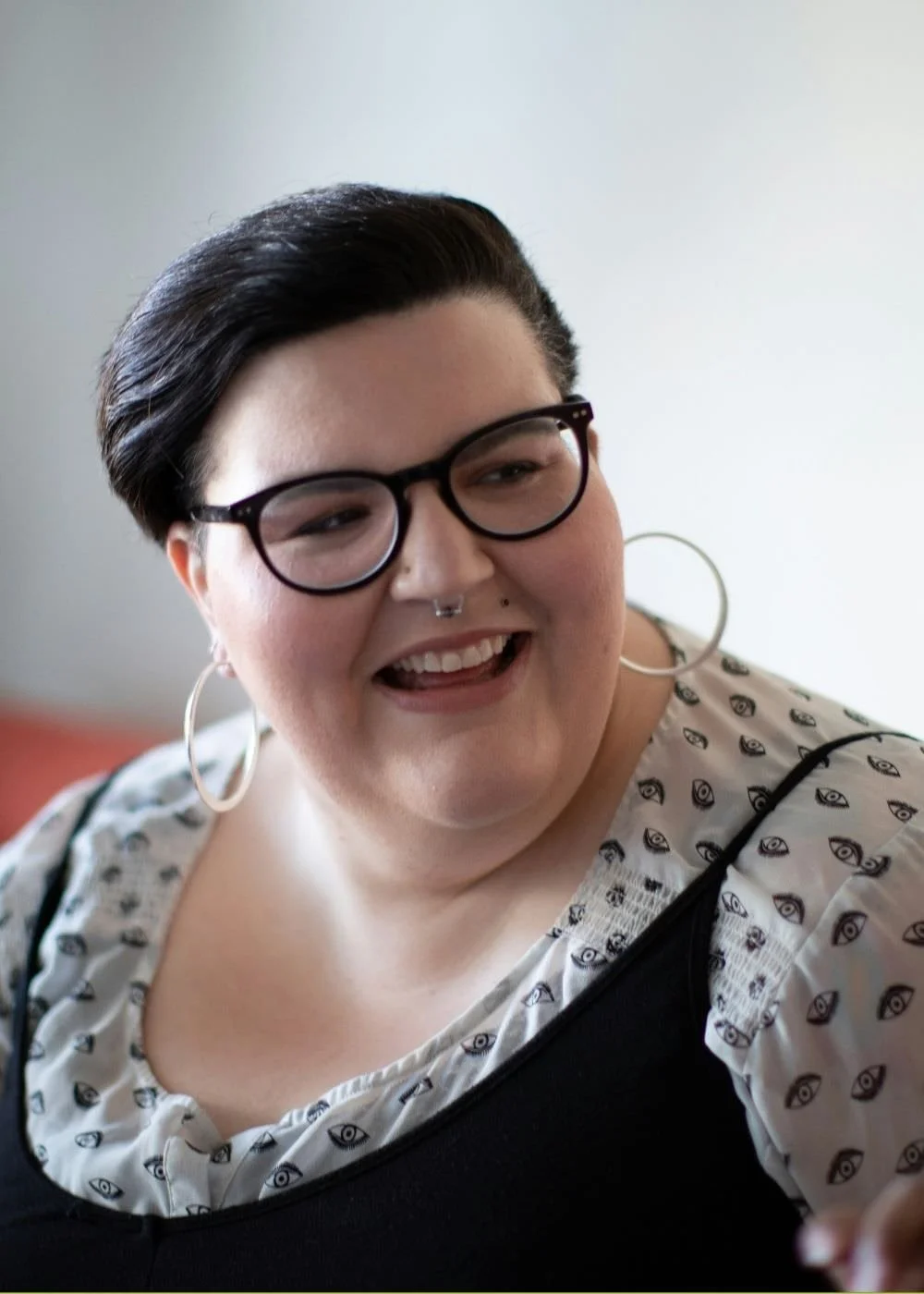
Meet Christine (She/Her)
As a queer art therapist and Certified Eating Disorders Specialist (CEDS), I use creative and somatic approachs to help people get to the root of their food issues, and find real confidence in themselves. With over 15 years in practice, I’ve dedicated my career to helping LGBTQ and transgender individuals find their own inner peace and trust the wisdom they already have.
Recovery narratives like body acceptance might not work for you, especially if you’re dealing with gender dysphoria. As a therapist with advanced training in gender affirming care, I’ll help you explore gender affirming options while working on healing your relationship with food. Instead of feeling like a failure, you’ll have compassion towards your body and all of the complicated feelings that come with it. Other people’s expectations will still be there, but they won’t define your worth.

what to expect from eating disorder therapy
Instead of fighting with your eating disorder, we’ll get curious about the ways it’s protected you.
Everyone’s story is different. That’s why I take time to really get to know you and your history with food.
I know it may be difficult to picture your life without this thing that has helped you get this far, but together we’ll dare to dream of what that could look like for you. Defining what you want out of this journey helps you stay committed when things feel hard. Real lasting change happens when it’s driven by your own motivations for recovery, not mine.
I use mind-body approaches including Art Therapy and Internal Family Systems to get to the root of your eating disorder. Art therapy can help you connect to your inner world in a way that words might not be able to. You don’t need to be an artist to benefit from art therapy. IFS helps you understand your conflicting feelings around your eating disorder, and make decisions grounded in your true self. When you start to understand where your food issues come from, you can heal the pain underneath them.
I practice from a weight-inclusive and social justice framework. That means we’ll look at how messages from your family, culture, and society have shaped how you see yourself and how you feel in your body. By unlearning these beliefs, you can begin to treat yourself with real compassion and actually connect to what really matters to you.
Recovery doesn’t have to be lonely. We’ll work on building and strengthening a support system of people you trust, so you don’t feel like you’re doing this all on your own. The more you share your story, the lighter it feels.
I’m not here to fix you, because you’re not broken. You won’t have to follow a strict treatment plan and you don’t have to do recovery “perfectly”. We’ll build a plan together—one that has structure and is flexible.
Do you have specific training in both eating disorders and gender-affirming care, or just one?
As a queer therapist with a trans wife, I understand the language of transition and have knowledge of trans experiences. As a cisgender therapist, I’ll never fully know what it feels like to be on your journey, but I am committed to helping you find peace with food that honors your full self.
I know that traditional eating disorder recovery narratives are not written with trans people in mind, and that body positivity lacks the nuance that is necessary for your healing. My approach to eating disorder therapy considers how your relationship with food, gender, and body image overlap.
Types of Eating Disorders I Treat
Anorexia Treatment for LGBTQ Folks
-
Anorexia treatment goes beyond just talking about food, and actually digs deep to understand what triggers your eating disorder. We’ll explore how your eating disorder might overlap with any identity struggles. Whether that’s gender dysphoria or trying to cope with the stress of living as a queer person in our homophobic society. The goal is to build a relationship with food that is flexible and sustainable.
My approach to anorexia treatment is collaborative, where we build a team that will support your recovery. This often includes a Registered Dietician who specializes in eating disorders, your PCP, and any loved ones whom you feel comfortable with. Many folks I’ve worked with have included friends and members of their community as part of their team. While I’ll make recommendations, this process is completely led by you. I truly believe that having a team you trust is vital to your recovery.
Bulimia Therapy
-
My approach to bulimia therapy is to create a space where you can be honest about your eating disorder behaviors, so we can understand what’s driving them and find ways to break the cycle. You don’t need to feel ashamed to talk about these things here and you’ll never get judgement from me, I promise.
Bulimia is an impulsive experience where binging and purging become a way to deal with uncomfortable feelings. We use art therapy, IFS, and mindfulness approaches to help slow down the cycle so you can pause before you react. If you’re struggling with bulimia, you may also have anxiety, depression, or a history of trauma. We’ll work on those simultaneously, while stabilizing your ED as the first priority.
Binge-Eating Disorder Treatment
-
Binge-eating disorder treatment in my practice is weight inclusive, which means I won’t recommend weight loss nor dieting as a therapy approach. Research has shown that intentional weight loss only serves as a quick fix, and doesn’t help binge eating long term. In fact, it often can make binge-eating patterns worse.
Together, we’ll work to understand what causes your binge-eating by exploring your daily eating patterns. For some people, binging is triggered by skipping meals and eating smaller portions throughout the day, known as the binge-restrict cycle. Your body goes into starvation, which can make it harder to notice when you’re feeling full. Binging may also be triggered by emotional eating and an attempt to cope with stress, anxiety, and depression.
I use intuitive eating, IFS, and art therapy to help you disrupt the binge cycle and connect with your bodily needs. We’ll address the eating behaviors and the emotional triggers simultaneously.
ARFID Therapy
-
Avoidant/Restrictive Food Intake Disorder (ARFID) is a restrictive eating disorder that can be caused by sensitivities to food textures, a lack of interest in food, or fear of choking or vomiting, often stemming from a past food trauma. The goal of ARFID therapy is to help you understand your unique triggers and build more flexibility and consistency around food.
I work with adults and teens navigating ARFID by combining tools from proven behavioral approaches with a real relationship that we’ll build together. I use a combination of exposure therapy, CBT, and treatment team coordination to help people address anxiety around food.
I recommend that you also work with a Registered Dietician who specializes in AFRID so you can get more hands-on support with food. My approach is collaborative so I work closely with your dietician and doctor to make sure everyone is on the same page.
Orthorexia and Disordered Eating
-
Orthorexia is an obsessive focus with “clean eating” and eating healthy. It can look like only eating foods that are organic and depriving yourself of anything that isn’t considered a whole food. You might find yourself still eating meals, but the variety of food is limited. You might avoid desserts and obsessively read food labels.
Perhaps you struggle with emotional eating, but you don’t have many binge eating episodes.
Disordered eating doesn’t need to fit neatly into a clinical box. Food issues don’t need a diagnosis and can still be disruptive to your quality of life.
My approach to disordered eating is social justice-oriented and weight inclusive. That means I won’t recommend weight loss nor dieting as a treatment approach. Instead, I use intuitive eating, IFS, and art therapy to help you explore the messages you’ve received about your body and other people’s bodies. Together, we’ll look at any internalized bias with compassion, and work to help you let go of those beliefs that don’t align with your vallues.
Look, I get it. I’m not going to pretend this is easy.
As someone who’s been there, I can tell you that finding peace with food is possible. I’m here for whatever you bring to our sessions, and I’d love to support you.
Eating disorder therapy can help you…
-
You can eat what your partner cooked for dinner without negotiating it in your head. Shared meals can feel relaxing and way to connect with your partner after a long day at work.
When you get together with friends, you allow yourself to stand front and center in photos, instead of hiding behind someone. You proudly share them on social media so you can tag your friends.
Imagine enjoying a last-minute ice cream stop on your way back from a Pride festival. You might have echoes of those old ED thoughts, but they will be much quieter and less frequent.
During beach trips, you get into your bathing suit so you can enjoy the feeling of the ocean water on your skin. You feel excited to go to that queer pool party, instead of avoiding it. Body image thoughts might still pop up, but they won’t derail your plans.
Feeling more confident to be yourself when you go on a date, rather than feeling like you have to manage how you’ll be perceived. You’ll be more present while sitting across from that person at dinner. Flirting and getting to know each other will feel fun and exciting.
After therapy, you’ll feel so much more secure in knowing that the ED path leads to nowhere, and that wisdom will keep you grounded whenever you face challenges.
-
You’ll have better sleep, more concentration, and the energy to go the gym after work. Imagine experiencing warmth, instead of constantly shivering and feeling cold. You’ll have way less bloating because you won’t be starving or overly stuffed from binging.
Walking your dog with your partner will feel like a chance to slow down after work, while enjoying getting some fresh air. Movement will feel good for your body, rather than a punishment.
Energy can be used to meet friends for happy hour without worrying about what’s on the menu. You might even stay a little later than you initially planned, because you’re not worrying about rushing home to squeeze in a workout.
Perhaps you’ll enjoy a cozy night in where you read that novel before bed, instead of researching low-calorie recipes. Stillness actually feels restorative, rather than a source of anxiety that needs to be filled with constant activites.
You’ll have more strength to dance at a concert, while you lose yourself in the music from your favorite band.
-
You’ll be able to navigate work events with so much more ease and calm. Your confidence will shine at work because you won’t be bogged down by calories and scale numbers. Your fully nourished brain will be able to troubleshoot problems, and you’ll feel strong in your leadership role.
In the break room, you have that piece of birthday cake for your coworkers birthday, instead of sneaking off to eat lunch alone.
If you’re a creative person, fully experiencing the inner calm as you lose yourself in your flow. Writing your fan-fic, building your Magic deck, and working on your mixed-media collage.
Your money will be put towards things that enrich your life, rather than safe foods, binging, and the next diet program.
-
Maybe you started HRT, and are dealing with some unexpected body changes along the way. Therapy will equip you with the tools to handle these shifts, without relying on old restrictions or bingeing habits. At the same time, there will be room to feel excited about the changes from HRT.
Gender expression can feel like something that boosts your confidence and is fun. Imagine creating a Pinterest board of clothing styles that inspire you, without worrying as much about whether you’ll look bigger.
Imagine going shopping with your friends for the first time and trying on clothes together. Maybe you feel a little nervous, but you also feel supported, making the trade-off worth it.
You’ll accept meals from your friends for your post-op surgery recovery, and allow yourself to rely on take-out. Experiencing the joy when you notice the results of your surgery without your ED under-cutting it.
Going to the gym because it feels good in your gender, rather than burning off the last meal you ate. Therapy will help you appreciate feeling “strong” from weight training and notice when you’re able to hold a yoga pose longer.
Being able to appreciate your body for what it has done for you, without placing your entire worth on it.

What Eating Disorder Providers Say
'I’ve had the pleasure of collaborating with Christine as a colleague and highly recommend her for her exceptional insight and dedication to her clients, particularly in helping them navigate challenging emotions around anxiety and body image concerns. Thanks Christine!''
-Yasmine Mavrakis, RD, LD-
Registered Dietitian Nutritionist
Christine is an authentic, intuitive and passionate therapist who has the unique ability to support clients using a variety of therapeutic techniques, including art therapy. As a dietitian, I have collaborated closely with Christine to support those struggling with disordered eating and eating disorders, especially those part of the LGBTQ community. I highly recommend Christine!
-Kate Regan, RDN, LDN-
Registered Dietitian Nutritionist
Eating Disorder Therapy Services
As one of the few Certified Eating Disorder Specialists (CEDS) in Philadelphia with advanced training in gender-affirming care, I offer an approach that goes beyond traditional treatment models.
Art Therapy for Eating Disorders
-
Art therapy can help us access our emotions in a way that words can’t. You don’t need to be good at art or have any artistic background to benefit from art therapy.
Eating Disorder Asssessments
-
Perhaps you’re a healthcare provider who wants a client evaluated for recommended levels of care for their eating disorder.
I offer 75-minute assessments that evaluate for anorexia, bulimia, binge-eating, and other eating disorders. Assessments include a written summary of my clinical impressions, treatment recommendations, and resources.
Internal Family Systems (IFS) Therapy
-
You might discover a part that is always counting calories while another part wants doesn’t want to think about food at all. Together, we'll help all parts of you feel heard and work toward internal harmony. We’ll explore what drives your eating disorder, and create a path forward that is right for you.
Intuitive Eating Counseling
-
As a Certified Intuitive Eating Counselor, I help you get more in touch with your body’s hunger and fullness cues, and learn to have a more flexible relationship with food.
REcovery is possible
Make peace with food. Take back your life. Live more freely.
faqs
Common Questions About Treatment
What is eating disorder treatment like?
Our first session focuses on what’s bringing you to therapy. We work together to craft a timeline of the history of your eating disorder and how it’s affecting you now.
We’ll explore what recovery means to you, identify the people in your community, and discuss whether you need more support.
Sessions may involve just talk therapy, while other sessions may incorporate mind-body approaches, like Art Therapy and Internal Family Systems.
Eating disorder treatment is collaborative. If needed, I will help you build a care team of people you trust. This often includes a dietician, primary care physician and sometimes a psychiatrist.
Is eating disorder therapy right for me?
It can be a big leap to make that first appointment! There are no guarantees, but here are some things to look for.
You might be ready if you…
Have been trying to manage your eating disorder on your own, but you need help.
Feel ready to add some accountability.
Just completed intensive outpatient treatment and are looking to step down.
Think body acceptance sounds nice in theory, but struggle to put it into practice.
Are interested in intuitive eating, but feel scared to try it alone.
You’re looking for a mind-body approach to therapy, and want more than just coping skills and behavior change.
How do you think about the relationship between gender dysphoria and disordered eating?
Trans people may turn to disordered eating as a way to achieve certain body features that feel more aligned with their gender. Trans masc people may restrict their eating to try and minimize curves or to avoid getting a period. Trans femme people may feel dysphoric over body fat distribution and may try to reduce their food intake to feel a sense of control over.
While gender dysphoria can intersect with disordered eating, it should be viewed with compassion and understanding. My approach addresses gender dysphoria, disordered eating, and body image issues simultaneously.
Will you be affirming of my gender and my transition?
One of the core values of my work is providing affirming care that centers trans individuals. I combine advanced training with my personal connections to the trans community to provide the safest space possible where you can be your whole self. I approach everyone’s journey with an open mind, while also remaining educated on common themes and struggles trans people may face.
What if I’m not ready to give up my eating disorder?
You don't need to be fully ready for recovery to begin therapy for eating disorders. Many clients feel ambivalent about change initially. We'll explore this ambivalence together and work at a pace that feels manageable while gently challenging eating disorder behaviors.
Do you work with all types of eating disorders?
Yes, I provide treatment for anorexia nervosa, bulimia nervosa, binge eating disorder, and other specified feeding or eating disorders. My integrative approach adapts to address various eating disorder symptoms and behaviors.
What if I’ve never been diagnosed with an eating disorder?
You don’t have to check certain boxes to be struggling with disordered eating. In fact, a lot of people with an eating disorder have never received a diagnosis. This is because not everyone’s experience with food is the same. Diet culture also normalizes undereating, which can make it harder to know if you have an eating disorder.
Do you work with trauma and eating disorders?
For some LGTBQ individuals, eating disorders are directly connected to traumatic experiences from the past. Counting calories and purging can be ways to manage feelings, and a feel a sense of control. Depending on where you are in your recovery, reducing eating disorders behaviors may be the first goal before starting trauma therapy.
Learn more about trauma therapy for LGBTQ individuals in Philadelphia.
Should people with eating disorders take GLP-1s?
As a Certified Eating Disorders Specialist (CEDS) through IAEDP, I do not recommend that people with an active eating disorder take GLP-1s. GLP-1s cause appetite suppression and rapid weight loss, which can actually make your ED symptoms worse. If you’re in eating disorder recovery, GLP-1s can increase the risk for relapse and malnutrition.
Click here to read more about navigating eating disorder recovery in the GLP-1 era.