
Art Therapy for Body Image in Philadelphia
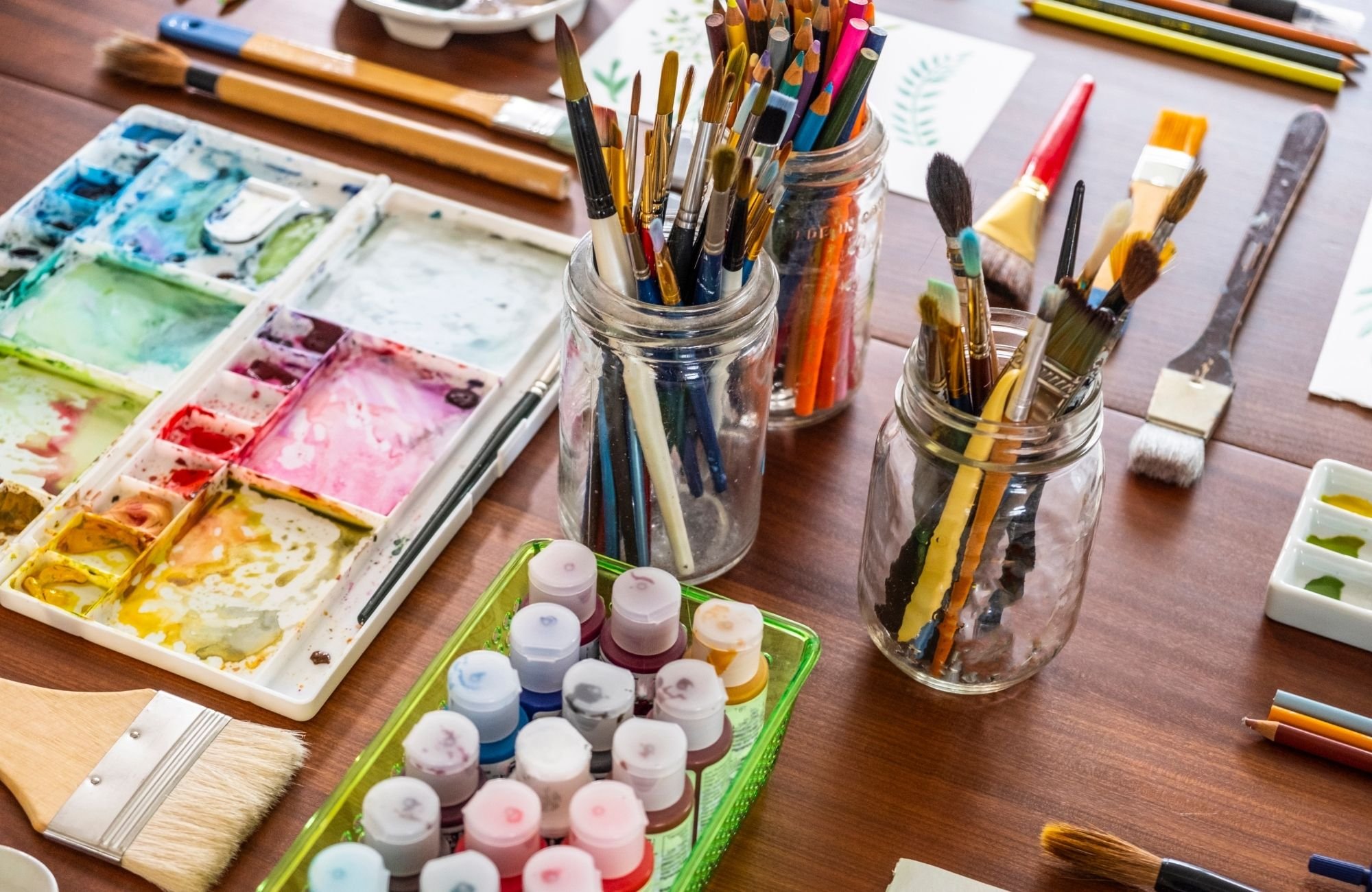
Art therapy for body image offers a powerful path to healing that goes beyond traditional talk therapy, allowing you to explore your relationship with your body through creative expression rather than words alone. As a registered art therapist and eating disorder specialist in Philadelphia, I have witnessed how the creative process can unlock insights and foster healing in ways that conversation sometimes cannot reach.
When words feel inadequate to describe your experiences with your body, when the disconnect between how you feel inside and what you see in the mirror seems impossible to articulate, art becomes a bridge. Art therapy for body image creates space for exploration, expression, and ultimately, transformation. Whether you are navigating eating disorder recovery, exploring your gender identity, or simply trying to cultivate a more compassionate relationship with the body you inhabit, creative therapeutic approaches can meet you exactly where you are.
Why Words Sometimes Fall Short
Many of my clients come to therapy having tried to talk through their body image struggles countless times. They have journaled, processed with friends, read books, and listened to podcasts. And still, something remains stuck. This is not a failure of effort or intelligence. It is a recognition that some experiences live in parts of us that words cannot easily access.
Our relationships with our bodies are formed long before we have language to describe them. The messages we absorbed as children about what bodies should look like, how they should move, and what makes them acceptable or unacceptable became part of us before we could critically examine them. Traditional talk therapy engages the logical, verbal parts of our brain. Art therapy reaches deeper, accessing the emotional, sensory, and intuitive aspects of our experience that hold so much of our body story.
When you create art in therapy, you are not trying to make something beautiful or technically skilled. You are giving form to internal experiences. The colors you choose, the pressure of your hand, and the shapes that emerge all communicate something about your inner world. And in that communication, something shifts. What was unconscious becomes visible. What felt overwhelming becomes manageable. What seemed unchangeable reveals new possibilities.
The Intersection of Body Image and Identity
For many people I work with in my Philadelphia practice, body image struggles are intimately connected to questions of identity. This is especially true for LGBTQ+ individuals, for whom the body can become a complex site of both dysphoria and possibility, of societal pressure and authentic self-expression.
When you are queer or trans, mainstream body image narratives often do not fit. The eating disorder recovery approaches that center heteronormative ideals of bodies and relationships can feel alienating rather than healing. The assumption that everyone's goal is to accept a body that aligns with their assigned gender misses the profound complexity of what it means to inhabit a body when your identity does not match societal expectations.
Art therapy creates space to explore these intersections without forcing your experience into predetermined categories. Through creative expression, you can externalize what it feels like to live in your body right now, imagine what healing might look like for you specifically, and discover insights that emerge from your own wisdom rather than someone else's template for recovery.
I bring both professional expertise and personal connection to this work. As a queer-identified therapist married to a trans woman, I understand from the inside how body image, identity, and eating struggles can interweave. This is not just clinical knowledge for me. It is lived experience that shapes how I hold space for clients navigating similar terrain.
How Art Therapy Works in Practice
You might be wondering what actually happens in an art therapy session focused on body image. Let me walk you through what this work can look like.
Creating Without Judgment
First and foremost, I want to reassure you that no artistic skill or experience is required. Art therapy is not about creating museum-worthy pieces. It is about process, not product. The materials, whether paint, clay, collage, markers, or found objects, become tools for exploration rather than tests of ability.
In our sessions, I might invite you to choose colors that represent how you feel in your body today, without planning or thinking too hard about it. Or we might work with body outlines, filling them with images, words, and textures that capture your internal experience. Sometimes we create timelines of body memories, mapping how your relationship with your body has shifted across your life. Other times, we might work with masks or sculptures that externalize different parts of your experience.
Making the Invisible Visible
One of the most powerful aspects of art therapy is how it makes invisible experiences tangible. When you create an image of your inner critic, suddenly that harsh voice has a form you can look at, question, and potentially transform. When you collage representations of how the world sees you versus how you experience yourself, the gap between external perception and internal truth becomes something you can examine and work with.
For clients exploring gender identity alongside body image, this externalization can be particularly meaningful. Art offers ways to experiment with self-representation, to try on different visual expressions of identity, and to imagine bodies and selves that do not yet exist in physical form but are yearning to be seen.
Integration with Other Approaches
In my practice, art therapy does not exist in isolation. I weave creative approaches together with Internal Family Systems (IFS) and psychodynamic perspectives to create a rich, multilayered therapeutic experience tailored to each person's needs.
IFS helps us understand the different parts within us. Perhaps there is a part that restricts food, a part that is terrified of weight gain, and a part that longs for freedom from body obsession. Art therapy gives these parts form and voice. When you draw or sculpt a protective part, you can begin to understand its fears and intentions with compassion rather than combat.
Psychodynamic understanding helps us make sense of how past experiences shape present struggles. Through art, we can access memories and patterns that verbal exploration alone might not reveal. The image you create might surprise you, connecting dots between your current body experience and earlier life events in ways that feel both unexpected and deeply true.
Healing Your Relationship with Your Body
What does it actually mean to heal your relationship with your body? This question deserves careful consideration because the answer is different for everyone.
Beyond Body Positivity
You may have encountered body positivity messaging that encourages you to love your body exactly as it is. While this sentiment comes from a good place, it can feel dismissive of real struggles. If you are in the midst of eating disorder recovery, if you experience gender dysphoria, or if your body holds trauma, being told to simply love it can feel like another way you are failing.
I prefer to talk about body respect, body neutrality, and body compassion rather than demanding love. These approaches acknowledge that your relationship with your body is complex and that healing is not about forcing positive feelings but about reducing suffering and increasing freedom.
Through art therapy, we explore what body respect might look like for you specifically. We create images of what freedom from body obsession would feel like in your daily life. We give form to the compassion you might offer yourself on difficult body days. This is not about achieving a final destination of perfect body acceptance. It is about developing tools and perspectives that allow you to live more fully, even when body struggles arise.
Reclaiming Your Body Story
Much of the pain around body image comes from internalized stories that were never ours to begin with. Messages from family, culture, media, and sometimes medical or mental health systems have told us what our bodies should be. Art therapy offers an opportunity to examine these inherited stories and begin writing your own.
When you create art about your body, you become the author of your own narrative. You decide what images represent your experience. You choose the colors, the composition, and the meaning. This creative agency can be profoundly healing, especially if you have felt that your body story has been written by others.
Specific Applications of Art Therapy for Body Image
Let me share some of the specific ways I use art therapy to support body image healing in my practice.
Exploring the Inner Critic
Almost everyone struggling with body image has an inner critic, a voice that comments harshly on appearance, size, and eating choices. This critic can feel all-encompassing, like it is simply reality rather than one perspective among many.
Art therapy allows us to externalize the critic, giving it a form outside yourself. When you draw or sculpt your inner critic, something shifts. You can see it as a part of you rather than the whole of you. You can begin to understand where this critic developed, what it is trying to protect you from, and whether its methods are actually serving you.
Some clients create dialogues between their critic and other parts of themselves through art. Others transform their critic images over time, watching as what once seemed monstrous becomes smaller, less powerful, or even reveals vulnerability beneath its harsh exterior.
Body Mapping
Body mapping is a technique I find particularly powerful for exploring the complexity of body experience. Using a life-size outline of a body (or a smaller version), we fill the interior with colors, images, textures, and words that represent your lived experience.
This might include areas of numbness and areas of sensation, places that hold trauma and places that feel like home, or the difference between how your body feels from the inside and how you imagine it appears from outside. For trans and gender-diverse clients, body mapping can be especially meaningful, offering space to represent dysphoria, gender euphoria, and the relationship between current body and imagined or desired body.
Future Self Visualization
Eating disorders and body image struggles often trap us in cycles of obsession with the present body and fear of future body changes. Art therapy can interrupt these cycles by inviting us to imagine futures that are not centered on body size or shape.
I might invite you to create an image of yourself five years from now, living a meaningful life. What are you doing? Who is with you? What matters to you? These images often reveal that our deepest desires have little to do with body size and everything to do with connection, purpose, creativity, and freedom. These insights can motivate recovery in powerful ways.
Processing Difficult Body Experiences
Sometimes words are simply inadequate to process difficult body experiences. Whether you are navigating a medical diagnosis, recovering from trauma held in the body, or grieving changes in body function or appearance, art offers a container for experiences that feel too big for language.
In these situations, the art does not need to be understood or interpreted immediately. Sometimes what matters most is that the experience has been expressed, witnessed, and held. The meaning may emerge later, or it may remain private and personal, belonging to you alone.
Finding Support in Philadelphia
If you are in Philadelphia and seeking support for body image struggles, eating disorder recovery, or the intersection of these with identity exploration, I invite you to reach out. My practice offers both in-person sessions in the Philadelphia area and online sessions for those who prefer the flexibility of virtual therapy.
I work with individuals across the gender spectrum, including those questioning or exploring their identity. My approach is informed by advanced training in eating disorders and gender-affirming care, as well as my personal connection to the LGBTQ+ community. I understand that healing looks different for everyone, and I am committed to supporting your unique path rather than imposing a one-size-fits-all approach.
The first step is a free 20-minute phone consultation where we can discuss what you are looking for in therapy and whether my approach might be a good fit. This conversation is an opportunity for you to ask questions and get a sense of what working together might feel like.
Beginning Your Journey
Healing your relationship with your body is not a linear process. There will be days of progress and days of struggle, moments of breakthrough and periods of plateau. Art therapy offers tools and perspectives that can support you through all of it, meeting you wherever you are with curiosity and compassion.
If traditional talk therapy has left you feeling stuck, if you sense there is something in your body experience that words cannot quite capture, or if you are looking for an approach that honors the complexity of identity, creativity, and embodiment, art therapy might be the path you have been seeking.
You do not need to have everything figured out before you begin. You do not need to be ready to love your body or even like it. You just need to be willing to explore, to create, and to discover what emerges when you give your inner experience form and color and shape.
Your body story deserves to be told in your own way, in your own images, on your own terms. I would be honored to support you in that telling.
Frequently Asked Questions About Art Therapy for Body Image
Do I need to be artistic or have art experience to benefit from art therapy for body image?
Absolutely not. Art therapy is about the process of creation, not the final product. No artistic skill, training, or talent is required. The materials become tools for exploration and expression rather than tests of ability. Many clients who initially feel nervous about creating art discover that the freedom from aesthetic pressure is actually part of what makes art therapy so powerful for body image work.
How is art therapy different from regular talk therapy for body image concerns?
Art therapy accesses different aspects of experience than verbal processing alone. Our relationships with our bodies are often formed before we have language, stored in sensory and emotional memory that words struggle to reach. Creating art bypasses the logical, verbal brain and connects with these deeper layers of experience. This can unlock insights and foster shifts that talk therapy alone might not achieve.
What kinds of art materials are used in body image art therapy sessions?
I offer a range of materials including drawing supplies like markers, colored pencils, and pastels, as well as painting materials, collage supplies with magazines and found images, clay and sculptural materials, and mixed media options. We choose materials together based on what feels right for you and what we are exploring in that session. Some people gravitate toward certain materials consistently while others enjoy experimenting.
How does art therapy help with eating disorder recovery specifically?
Art therapy supports eating disorder recovery by externalizing the eating disorder voice, exploring the functions that eating behaviors have served, processing difficult emotions without using food or body manipulation, imagining recovery and life beyond the eating disorder, and developing body compassion. The creative process also builds tolerance for imperfection and uncertainty, which are crucial skills in recovery.
Can art therapy help with gender dysphoria and body image together?
Yes, art therapy is particularly well-suited for exploring the intersection of gender identity and body image. Creative expression allows you to externalize dysphoria, imagine bodies and presentations that feel authentic, experiment with self-representation, and process the complex emotions that arise when your body does not match your internal sense of self. Art offers ways to envision and connect with your authentic identity that verbal exploration alone cannot provide.
What happens in a typical art therapy session focused on body image?
Sessions typically begin with checking in about what is present for you. We might discuss themes or experiences you want to explore, then I offer an art directive or invitation tailored to your needs. You create while I hold supportive space, sometimes working in silence and sometimes talking as you create. Afterward, we explore what emerged through the art, including what you notice, what surprised you, and what feels significant. The meaning is always yours to make.
How long does art therapy for body image take to show results?
Healing timelines vary significantly from person to person. Some clients experience meaningful shifts within the first few sessions, while others engage in longer-term work to address deeply rooted patterns. I generally recommend committing to at least eight to twelve sessions to give the process adequate time to unfold. We regularly check in about how therapy is feeling and adjust our approach based on what is and is not working.
Is art therapy appropriate for teens struggling with body image?
Yes, art therapy can be especially effective for teens who may find verbal processing challenging or intimidating. Creative expression offers teens a way to communicate complex experiences without requiring them to find perfect words. For LGBTQ+ teens navigating identity alongside body image concerns, art therapy provides space to explore authentically without pressure to fit into categories or meet others' expectations.
Do you offer online art therapy sessions for body image work?
I offer both in-person sessions in Philadelphia and online sessions. For virtual art therapy, I help you gather simple materials beforehand, and we adapt techniques to work effectively through the screen. Many clients find online art therapy just as meaningful as in-person work, with the added benefit of being able to create in their own comfortable space.
How do I know if art therapy for body image is right for me?
Art therapy might be a good fit if you have felt stuck in traditional talk therapy, if you sense that your body struggles are connected to experiences that feel hard to put into words, if you are drawn to creative expression, or if you want an approach that honors the complexity of your unique experience. The best way to find out is through a free consultation where we can discuss your goals and whether my approach resonates with what you are seeking.
